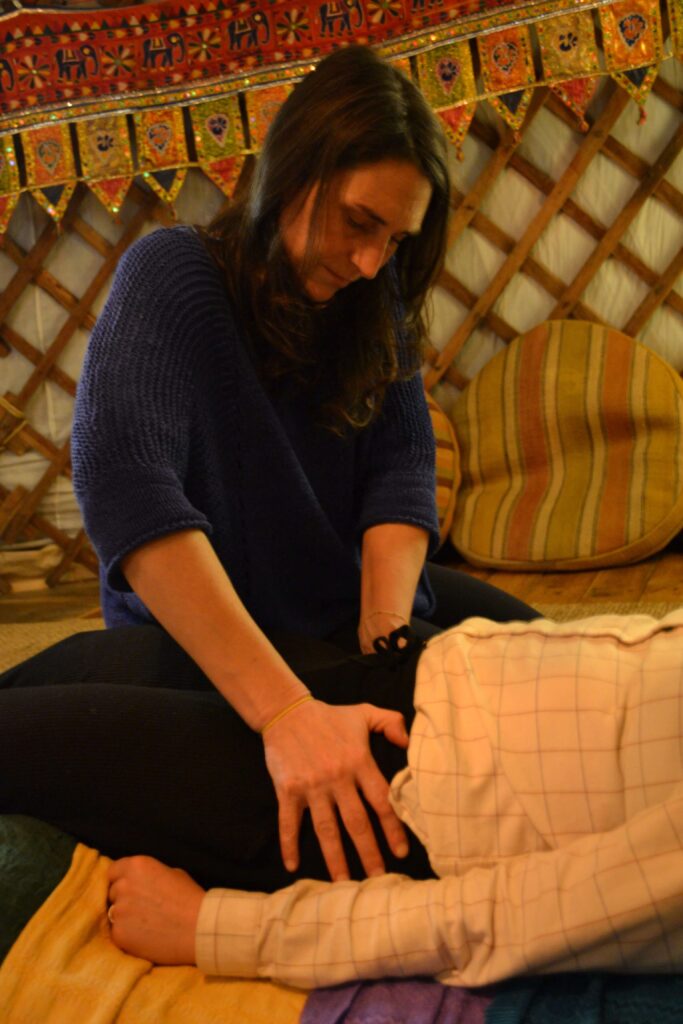
A nurturing and ancient massage that honours the woman who becomes a mother.
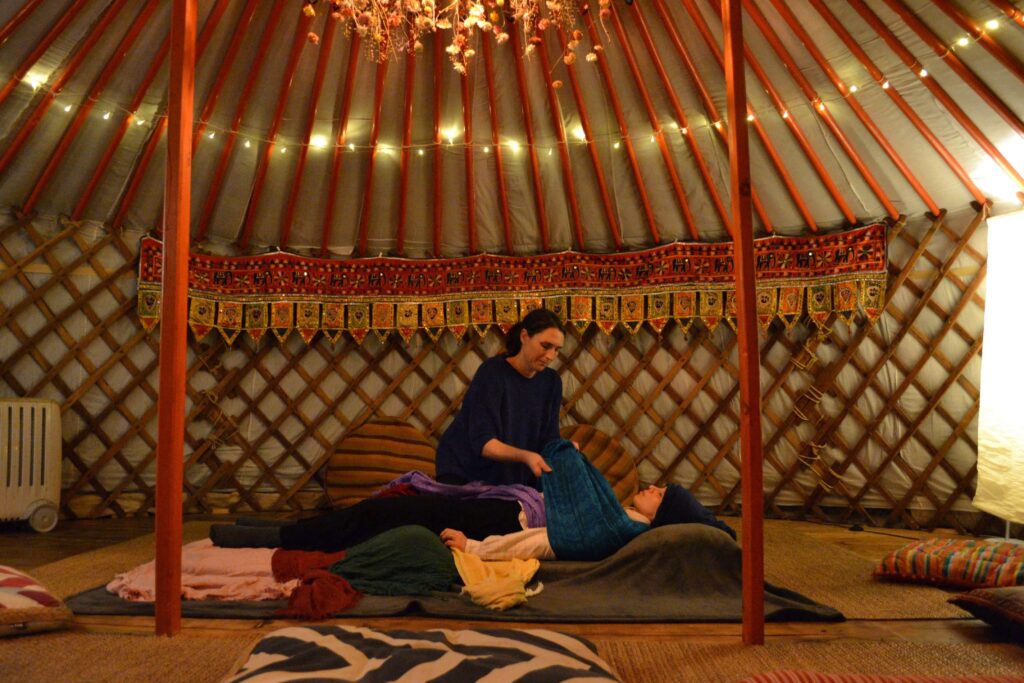
In many traditional postpartum cultures, new mothers receive Postnatal Rebozo Massage and the Closing the Bones Ceremony in the days and weeks following childbirth to support and speed their recovery. This beautiful ritual is designed to honour, nurture, and hold the mother as she steps into a new stage of her life.
The ceremony brings a sense of closure on three levels — physical, emotional, and spiritual — following the deep opening that occurs during pregnancy and birth. It offers a gentle transition, allowing the body and spirit to settle, integrate, and restore.
The practice originates in Mexico and Ecuador, though similar rituals can be found across cultures and throughout history. Ancient postpartum bodywork traditions share a common understanding: a mother’s needs are universal. Wherever she comes from, she needs warmth, gentle touch, rest, and nourishment. She needs to be held — so that she, in turn, can hold and care for her baby.
Postnatal Rebozo Massage and Closing the Bones are beneficial for a woman’s physical recovery, emotional wellbeing, and mental integration after birth. They can be especially supportive following challenging births or when processing difficult or traumatic experiences, offering a safe and compassionate space for release and healing.
Rebozos are long woven shawls traditionally used in Mexico and other Latin American cultures. During the ceremony, they are used to gently massage, rock, and wrap the mother’s body. In other parts of the world, hands or alternative fabrics are used in similar ways — the intention remains the same: to comfort, contain, and restore.
My own journey with this practice began early in my work as a doula. When my best friend was about to give birth, I wanted to gift her something meaningful — something just for her, not only for the baby. When I learned about the Closing the Bones Ceremony, I knew it was the perfect offering: a ritual focused on her wellbeing, recovery, and emerging identity as a mother.
I completed my training with Sophie Messager, a doula and postpartum advocate who beautifully weaves traditional postpartum wisdom with the latest evidence-based care. Her approach offers a modern, compassionate interpretation of the Closing the Bones Ceremony, honouring both ancestral knowledge and contemporary maternal needs.
What happens in a closing the bones ceremony
Before it starts there is always time for a chat🧡 We talk about life with the new baby, recovery, feelings and expectations.
I prepare the room, creating a cosy and safe space. I place the rebozos, whose colours form a beautiful rainbow, in the centre of the room.
This recovery massage and ceremony can take place with your baby nearby. Often a partner, family member, or close friend will care for the baby so you can fully relax and enjoy this precious time for yourself.
Once you are comfortable and lying down, I explain what to expect and remind you that the ceremony always follows your lead. I hold the space gently, witnessing and supporting any emotions that may arise, without judgement or rush.
After a few moments of deep breathing, the massage begins.
Using the colourful rebozos, your body is softly rocked — head, shoulders, pelvis, arms, and legs. Rocking is a primal, deeply familiar sensation: the same movement we instinctively use to soothe our babies. It brings profound relaxation, calm, and a sense of safety.
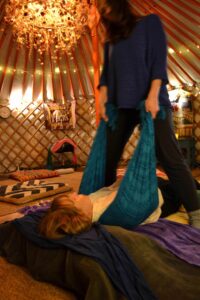
After the full-body massage, I wrap your body with the rebozos, paying particular attention to the pelvic area. This closing supports the body after pregnancy and birth, helping the pelvis feel more stable and supported. Many women also report feeling more physically contained and grounded.
Once wrapped, you are covered with a warm blanket and given time to rest. This part of the session allows space for physical and emotional integration. It can take place in silence or with gentle music, depending on your preference.
At the end of the session, we take time to gently come back, share reflections if you wish, and ensure you feel supported before the session ends.
When is the best time to receive this massage and ceremony?
If you are considering Postnatal Rebozo Massage and Closing the Bones, it can be received very soon after birth — from hours or days after a vaginal birth, or from around three weeks after a caesarean, once initial healing has begun.
The first few days and weeks after birth are an ideal time. In Colombia, for example, new mothers often receive this massage just hours after giving birth and then at least once a week for the first 40 days. This level of care offers deep support and nurturing during a time when mothers need it most.
That said, the benefits are not limited to the early postnatal period. Postpartum recovery lasts far longer than many people realise, and this massage can be deeply beneficial months or even years after childbirth. It can be particularly supportive in cases of birth trauma, miscarriage, or breastfeeding grief, as it works on physical, emotional, and psychological levels.
After three years of offering Closing the Bones in Cardiff and South Wales, I have seen its positive impact on many women. Rebozo Massage and Closing the Bones can also support other life transitions, such as divorce or perimenopause, offering a sense of grounding and closure.
I offer sessions in your own home or at Yurt in the City — a real yurt built into a room, designed to stay warm in winter and cool in summer.
You can read more about Rebozo Massage and the Closing the Bones Ceremony here.